100 reasons for not training and 1 good reason for getting off the couch called Micro-Training

five minutes on timer 

I had some new years goals (call them resolutions if you want)…and then life intervened.

By life I mean unexpected expenses, the death of one of our cats, a slow December at work followed the busiest month EVER at Prairie Dog Daycare. I’m working 50+ hours a week and to top it all off, some (minor) health concerns have reared their head and it’s all an indication that I need to re-prioritize my life and build in some more down time for myself. This has meant cancelling weekend plans (including trials) tightening our budget at home (again) and a lot of early bed times.

One of the things that has been bothering me is that I feel like I’ve been neglecting Bear’s training. The lack of training is obvious when I see Bear on the other side of my laptop, chin resting on the coffee table and looking invitingly from me to the toy between us and back again.

*heap on guilt here*

Some might say this is his way of trying to manipulate me or become the alpha or gain status but I see it as his way of trying to engage  by ‘hinting’ that he’d like to play and I shouldn’t let that go unnoticed because eventually he’s just not going to bother and , after all, I’ve been trying  to get this  kind of engagement in the Rally-O ring.

I’ve been thinking a lot about the fact that I need to figure out a way to build training into my schedule – with the Daycare being at capacity there’s simply no room to bring Bear to work for some quick sessions and tracking is out of the question during the week because it’s dark before I get home. I need to have a look at my planned indoor activities and find a way to make them fit into my schedule.

As I was contemplating schedules, training and ‘doing it all’ earlier this week, I came across an interesting website called SpotOn Agility that was touting a training method called Micro-Training in a free e-book. As far as I know, this e-book is still available for free here. I finally got around to downloading and reading it today and Micro Training involves short training sessions interspersed with short play sessions. Each ‘session’ is 1 minute long and the authors recommend training in two sessions a day for a total of 12 minutes.

I had a complete and utter V8 Moment!

I have always encouraged students in my classes to train in short intervals such as while waiting for your coffee to perk or during a commercial break on TV. Typically this is what I have done but never in a formal way and never with a timer as suggested in the e-book.

Furthermore, while the folks at Spot-On have trademarked the terms Micro-Training and Over-Training Zone, these concepts are not unknown to the dog training and behavior world. As the author mentions, she was introduced to the one minute concept by Terry Ryan at a Chicken Camp. Also, in the book Control Unleashed, Leslie McDeavitt discusses relaxation, stress, thresholds and the game called ‘gimme a break’ which starts with a training session aimed at delivering rewards in rapid succession followed by a “break, or allowing the dog to do as they wish. The train, break, train repetition makes training low stress and in many cases the dogs are ready to start training before their break is over. Bear and I have been using the ‘gimme a break’ game in class as a way to build some reinforcement for longer and longer sequences. Bear loves this game and so do I. To me, ‘gimme a break’ and Micro Training are different but of the same cloth: Both aim at working in short, stress free sessions, both demand planning on the part of the handler when determining their training criteria for the session and the goal of each method is to keep the dog calm and able to work through challenging behaviors.

So,  I got out my timer, our tug toy and counted out my rewards. We spent 6 minutes playing and working on ‘turn’ which is a clockwise spin in place with a verbal cue only. It was fun, it was easy and you know what – I felt instantly better about Bear, training and my ability to ‘make time’ because lets face it – who can’t fit 6 measly minutes of training into their day?

In order to remind myself that I owe Bear 6 minutes, my timer and treat bag are sitting in plain sight on my kitchen counter.

Rally Course of the Week – January 16, 2012

Course Details

Level: Excellent (CARO)

Space Required: 60’x70′

Designer: Ayoka Bubar

Comments: This is another straight forward Excellent course with the exception of the weave poles as the first station. Some dogs, especially those who compete in agility, will leave for the weave poles right off the start line and this may incur out of position deductions.

Download this Course: CARO 60′x 70′ Course – Excellent 2 (T11-63)

If you would like to have your course featured as a course of the week, just email it to me (prairiedogdaycare@yahoo.ca) and I’ll happily give you credit and provide your personal or business contact info and link.

Rally Course of the Week – January 9, 2012

Course Details

Level: Advanced Team (CARO)

Space Required: 60’x70′

Designer: Ayoka Bubar

Comments: This is a great team course for distracted dogs as most of time, each team will be working in their own half of the ring. There is the mandatory pass designed at the beginning of the first pair’s course and the end of second pair’s course. When deciding which half you will complete with your dog, it’s worth considering their working style as well as how well they perform the exercises. A dog that is better off moving with another dog in the ring might take the first half where a dog that can stay focused through sits with another dog in the right might take the second half. Often you will be paired with someone unknown to you so it’s bet to ask them about their strengths and weaknesses (and know your own) before you step into the ring with your dogs.

Download this Course: CARO 60′x 70′ Course – Advanced Team 2 (T11-63)

If you would like to have your course featured as a course of the week, just email it to me (prairiedogdaycare@yahoo.ca) and I’ll happily give you credit and provide your personal or business contact info and link.

Rally Course of the Week – January 2, 2012

Course Details

Level: Advanced (CARO)

Space Required: 60’x70′

Designer: Ayoka Bubar

Comments: This is another bic Course with a lot of sits (13!). Since you only have 3 minutes to complete all this work, you need to be working towards a smooth performance without having to take the time (and point penalty) for extra cues. It also helps to move at a brisk pace!

Download this Course: CARO 60′x 70′ Course – Advanced 3 (T11-63)

If you would like to have your course featured as a course of the week, just email it to me (prairiedogdaycare@yahoo.ca) and I’ll happily give you credit and provide your personal or business contact info and link.

Tender Tuna Treats

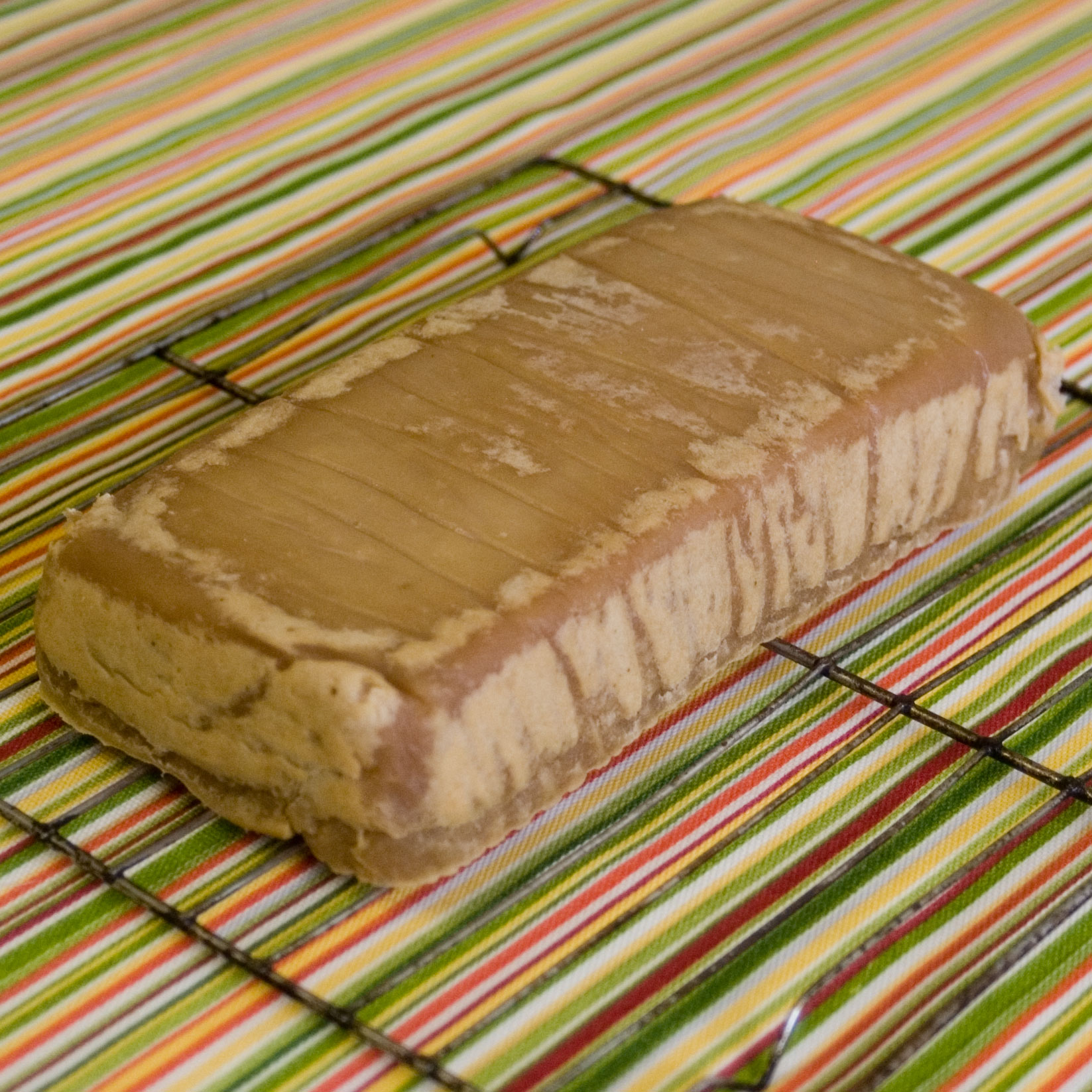
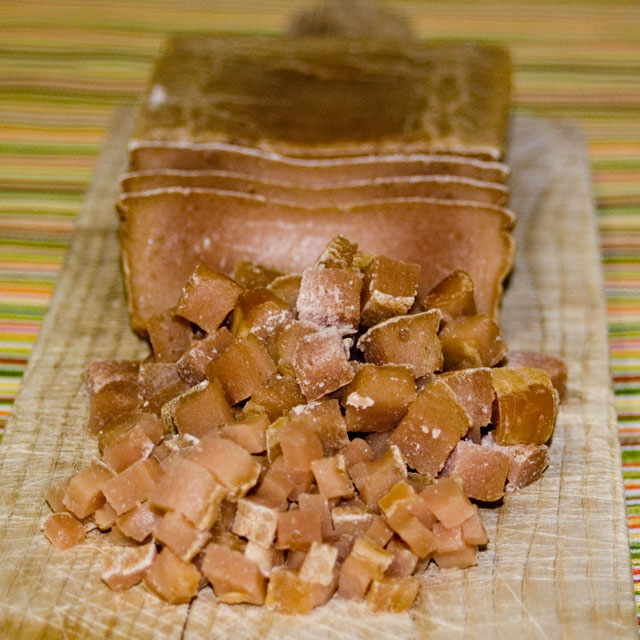
At the last Rally Obedience Trial we attended in Regina, Saskatchewan, I borrowed some of my friend Dayna’s tuna fudge for one of our runs and Bear just about lost his mind. Tuna is not something Bear gets on a regular basis so I got to thinking I should make some grain free tuna treats for him and so, after a bit of experimenting in the kitchen, I came up with these.

Here we go…

Pre-heat your oven to 350 degrees.

In a blender or food processor, puree tuna (water included) and eggs until smooth. I pureed one can of tuna and one egg at a time because my blender is kinda small.

Once your eggs and tuna are pureed smooth, add in sliced garlic and puree until smooth again.

Pour your pureed garlic, tuna and eggs into a bowl and mix in tapioca flour, making sure to whisk out lumps. I used my mixer but a whisk works well too.

Line a loaf pan with parchment paper or lightly coat it in cooking spray and pour in the batter. Bake at 350 for 45 minutes.

Once the loaf is finished baking, remove it from the pan immediately to cool upside down on a cooling rack.

Once cool, cut your loaf to whatever size you prefer.

Store in a sealed container in yourfreezer, taking out what you need for training on a daily basis.

Download a Printable Version of this Recipe Here. 

Have a dog-friendly recipe you’d like us to feature? Send us your recipe and we’d be pleased to share it!

Rally Course of the Week – December 26, 2011

Course Details

Level: Excellent (CARO)

Space Required: 60’x70′

Designer: Ayoka Bubar

Comments: In this fairly straightforward Excellent course, the main challenge is working relatively closely to obstacles and the tunnel in particular seems to be a difficult obstacle for many dogs to ignore. Using obstacles as distractions in training is always a good idea, especially if you have a dog with experience working obstacles at a distance (agility) or one who thinks every tunnel is on the course for him to run through multiple times!

Download this Course: CARO 60′x 70′ Course – Excellent 1 (T11-63)

If you would like to have your course featured as a course of the week, just email it to me (prairiedogdaycare@yahoo.ca) and I’ll happily give you credit and provide your personal or business contact info and link.

In defense of ‘doing nothing’ with a dog

“Gee your dog has it pretty easy; he gets treats for doing nothing!”

I overheard this comment from one person to another at a rally trial last year. Comments like this really grind my gears…so please, allow me to dust off my soap box and offer you a few short points on why unhelpful statements like this still get me all riled up almost a year later.

Why comments like this bother me

  • They are typically unsolicited and come from a complete stranger – not from a judge, not from the team’s trainer, not even from a friend.
  • They imply that the person to whom the comment was made is a not an effective trainer because if they were, their dog would be ‘doing something’ for a cookie.
  • They imply the person who made the comment is skilful enough to assess what’s going on with another team in a short period of time. As a Certified Professional Dog Trainer, I know that the best training advice is the result of a lot of time spent asking questions and observing.
  • In this case, the dog in question is one of the most fearful dogs I know.
  • In this case, I know what said dog could be doing – he could be barking and lunging or he could shut down completely and cower in a corner, unable to look at – or eat – anything.
  • In this case, I know how much work this dog’s owner had done with the dog – and it’s years.
  • I know for a fact the dog was working – He was playing a game popularised by Leslie McDevitt in her book Control Unleashed called “look at that”.

Essentially, when comments like this are made, I think that the person making the comment has made two flawed assumptions about people and their dogs that grind my gears.

The first assumption is that dogs are only ‘working’ when they are responding to direct verbal or physical (hand signal) cues, commands or prompts from their humans.

Don’t get me wrong, I love a responsive dog as much as anyone, but I think it’s important to remember that being calm and attentive in a busy trial environment (or at a family picnic, or in the field) is hard work
in fact, I would argue it’s the hardest work of all because it requires a dog to:

  • Be confident enough in her handler’s to trust that her handler will keep her safe.
  • Be comfortable enough in an environment to settle near his handler or in his crate.
  • Practice self-restraint when confronted with a worrisome (or interesting) dog, sound or object.
  • Offer (appropriate) behaviours (sit, down, eye contact, look at that) in an environment filled with distractions.
  • A dog that cannot do these things cannot be ready to respond to your cues and until you have dealt with these issues, your dog’s responsiveness is compromised.

The second assumption is that because their dog (or a dog they know, or a dog they’ve seen on TV) can do, other dogs should be held to the exact same set of standards and expectations. My experiencing teaching and coaching humans and dogs has taught me that every dog and every dog owner has a unique history and a certain set of skills, challenges and sometimes deficits which all affect a dog’s ability to function cope or learn at any time and in any given environment. This means that each dog learns and grows at their own rate – no two learn everything at exactly the same rate and no two are distracted or worried by the exact same things. some dogs learn some things faster and some slower but with time and guidance, theses dogs and their owners do improve – at their own speed.

I don’t fully understand why people make these assumptions or feel the need to say such things to total strangers. Maybe they have been blessed with fearless and attentive dogs that have only eyes for them, or perhaps their dog raising experience has given them the skills to raise dogs that are prepared to handle all the wonderful (and scary) things the world has to offer. Regardless of why these assumptions are made, I am begging all dog lovers, owners and trainers to appreciate that for some dogs, being able to ‘do nothing’ but be calm and attentive in a show, trial or class environment may be the result of weeks or months or years of work.

For the love of doG, next time you see a dog ‘doing nothing’ for treats, hold your tongue, and take the time to enjoy a dog and their person sharing a quiet moment together. Companionship is, after all, what having a dog is all about – isn’t it?

Rally Course of the Week – December 19, 2011

Course Details

Level: Advanced Team (CARO)

Space Required: 60’x70′

Designer: Ayoka Bubar

Comments: This course has each team waiting near the centre of the course while the other team works around them which may or may not be something your dog is comfortable with. It’s a good idea to think about practicing your team runs while waiting with your dog in various locations. It’s also worth noting that the rules regarding team runs do not explicitly state how a team is to wait at their station while the other team runs their half of the course. This means that as a handler it is up to you to position your dog in a manner that is comfortable for him and the least distracting to your teammate and the only way to find out is to practice!

Download this Course: CARO 60′x 70′ Course – Advanced Team 1 (T11-63)

If you would like to have your course featured as a course of the week, just email it to me (prairiedogdaycare@yahoo.ca) and I’ll happily give you credit and provide your personal or business contact info and link.

Carting with a Clicker: Ready to Hitch

The Rules

There are very few harnessing and hitching guidelines in the CKC Draft Test Rules and Regulations (2011). The rules are as follows:

  • Hitching and harnessing are the only times when the handler may touch the dog.
  • The dog must stand during harnessing/hitching/loading/unhitching.
  • During the harnessing and hitching, the handler’s skill and the dog’s willingness will be judged.

There is nothing written about HOW the dog must be hitched but the fact that the dog must be willing makes me think, lifting, dragging, poking and prodding won’t be allowed. Because I want Bear to be über comfortable with this process and understand his ‘job’, I am going to shape the behaviour with a clicker. I like to start shaping with a plan so I’ll outline my shaping plan below but you can find a printable handout on the Resources page.

Goal Behaviour

Your dog stands still comfortably between the shafts of the cart in his harness so that you can attach the shafts and the traces.

You have a few options where this is concerned:

  • You could hold the shafts up over the dog and teach him to line up beside you so you can lower them down over him.
  • You could teach your dog to step over the shafts resting on the ground and stand still between them.
  • You could teach your dog to back up in a straight line between the shafts.

I don’t think it matters which method you choose however you may want to take your dog’s temperament and previous training into consideration. I chose to go with method #2 because Bear was a little concerned about all that tubing over his head and because we have done some targeting work already with PVC boxes for Rally Working Levels which I think will help.

Training Plan

To begin with I’ll start in a smallish room with no distractions and ONLY the cart out on the floor in the middle of the room. I am planning to start standing in front of the cart beside the shafts so that when Bear is standing properly between the shafts he will essentially be in heel position.

  1. Click for looking at the cart
  2. Click for moving towards the cart
  3. Click for moving towards the cart shafts
  4. Click for front feet approaching shafts
  5. Click for raising a paw over shafts
  6. Click for placing a paw on the ground between the shafts
  7. Click for placing two paws between the shafts
  8. Click for placing three paws between the shafts
  9. Click for placing four paws between the shafts

Reward

After each click I am going to toss a cookie away from the cart to encourage Bear to move away so that he has to re-engage with the cart to get another click and another cookie.

Demonstration

To get you started, below is a video of one of our first training sessions so you can see how I am teaching this and so you can see a dog’s mind at work.

This video is a great illustration of why having a plan and knowing what you plan on reinforcing is important – sometimes your dog “gets it” a lot quicker than you’d imagine and you need to be ready to capitalise on their enthusiasm.

Problem solving

  • If your dog is worried about stepping over the raised shafts…try removing them from the cart and shaping your dog to line up between them on the ground. Then, very gradually, raise the shafts until they are the same heigh as they would be when attached to the cart
  • If your dog is spooked by the shafts touching her sides…try removing them from the cart and have a friend hold them further apart until she is more comfortable, then gradually, bring them closer. Alternatively, you could forget about lining up between the shafts for now and click and reward each and every time ANY part of her body touches the shafts.

Next Steps

To begin with I plan on teaching this exercise without Bear wearing the harness and once Bear is readily moving into position I will harness him and start all over again. Once he’s offering the behaviour consistently, I’ll add our cue “hitch up!”

Rally Course of the Week – December 12, 2011

Course Details

Level: Advanced (CARO)

Space Required: 60’x70′

Designer: Ayoka Bubar

Comments: This course is ‘light’ on advanced exercise but it is essentially built around the food bowl exercise. furthermore, the food bowl exercise is right of the bat so your dog will KNOW exactly where they are. This course makes a good case for practicing other exercises and general heeling around mega distractions because they won’t always be placed in a corner. 

Download this Course: CARO 60′x 70′ Course – Advanced 2 (T11-63)

If you would like to have your course featured as a course of the week, just email it to me (prairiedogdaycare@yahoo.ca) and I’ll happily give you credit and provide your personal or business contact info and link.